Nasolabial Folds
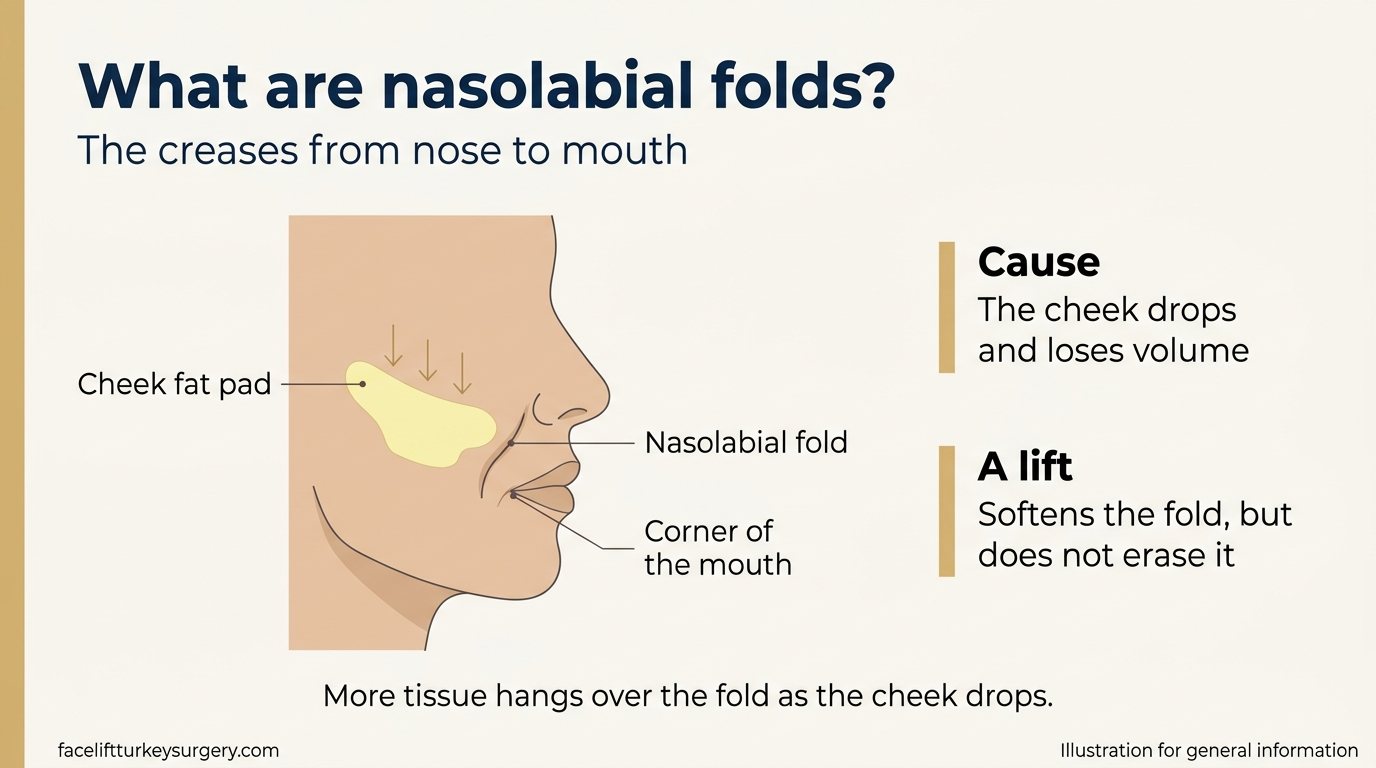
The nasolabial folds are the lines that run from the sides of the nose to the corners of the mouth. Everyone has them, and they are part of normal expression. They become deeper with age because the cheek fat slides down and forward, the cheeks lose volume and the skin loses elasticity, so more tissue hangs over the fold.
Because the cause is mainly the position of the cheek, a lift that raises the cheek tissue softens the fold. A facelift does not erase it, and a fold that remains is normal. Fillers or fat grafting can restore lost volume, and surgeons often combine them with a lift. A deep plane facelift or a mid facelift can reposition the cheek more than a lower facelift, which mainly treats the jaw.
Questions to ask your surgeon about Nasolabial Folds
Ask what the plan does for the cheek, not only for the fold. Treating the fold alone with filler can make the midface look heavy.