Plan for about 10 days in Istanbul (most patients stay 9 to 12 nights): 1 to 2 nights in the hospital, then about a week in your hotel with a nurse visiting every day. You fly home only after your surgeon confirms that your healing is on track. Most people are back to daily activities within 1 to 2 weeks and feel largely recovered by weeks 4 to 6. This guide explains what each stage feels like after a deep plane facelift in Turkey or any other facelift technique, how to rest well in a hotel room, when you can go outside and how to prepare for the flight home.
Planning your stay: how long to stay in Istanbul after a facelift
The short answer is about 10 days (most patients stay 9 to 12 nights), and your exact dates are confirmed in your travel plan. That time is not a formality. The first days after surgery are when your surgeon and nurse most want to see you, because swelling, bruising and the rare early problem, such as a collection of blood under the skin (a hematoma), show up first. Staying close to your surgical team means any change is noticed and treated quickly, rather than during a flight or after you are back home.
Here is how the stay is usually divided:
| Stage | Where | What happens |
|---|---|---|
| Surgery and first nights | Hospital, 1 to 2 nights | Nursing care, prescribed medication, first checks |
| Recovery | 5-star hotel, about 6 to 7 nights | Rest, daily nurse visits, short gentle walks |
| Final check | With your surgeon | He confirms healing is on track before you travel |
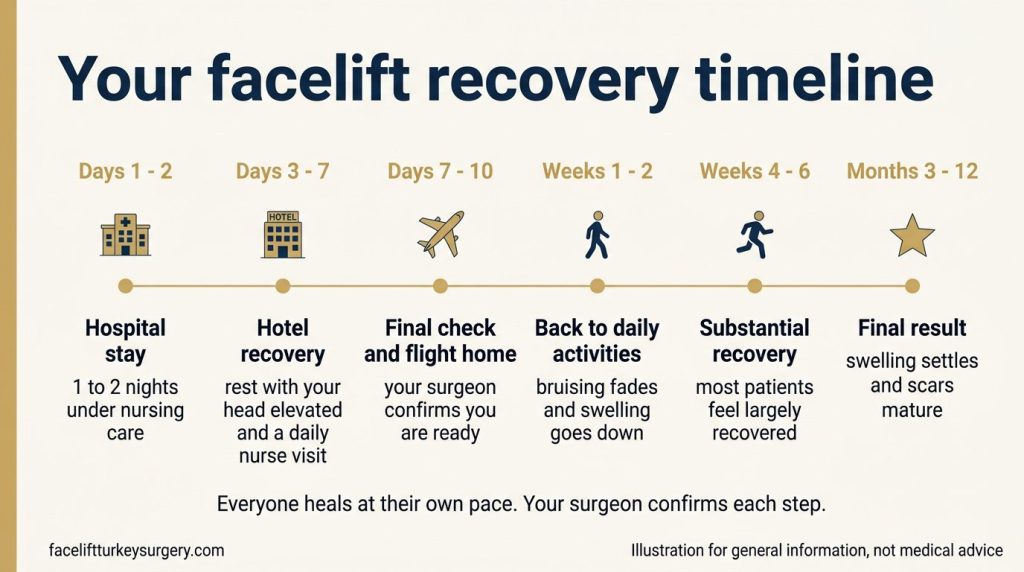
Here is the whole recovery in one view, from the first days to the final result:
| When | Stage | What to expect |
|---|---|---|
| Days 1 to 2 | Hospital stay | 1 to 2 nights under nursing care; tightness, swelling and bruising managed with prescribed medication |
| Days 3 to 7 | Hotel recovery | Rest with your head elevated; an English-speaking nurse visits every day |
| Days 7 to 10 | Final check and flight home | Your surgeon confirms healing is on track before you travel |
| Weeks 1 to 2 | Back to daily activities | Bruising fades and swelling goes down |
| Weeks 4 to 6 | Substantial recovery | Most patients feel largely recovered; your surgeon tells you when you can exercise again |
| Months 3 to 12 | Final result | Remaining swelling settles and scars mature |
Many people ask whether a deep plane facelift needs a longer stay than a SMAS facelift. Your surgeon decides on your length of stay based on your plan, your healing and any procedures you combine, such as a neck lift. Plan for the same stay of about 10 days with either technique, and keep your return flight flexible. You can read how the two techniques differ on our deep plane facelift and SMAS facelift pages.
Why not fly home sooner? Long flights are tiring for anyone, they raise the chance of blood clots in the legs, and you would be far from the team that knows your case if swelling or a wound problem appears. The stay is part of the safety plan, not an extra. If you are still planning, see our travel guide for Istanbul and the step-by-step process.
The first days: hospital stay and what to expect
In the first 1 to 2 nights, expect tightness, swelling and bruising, managed with prescribed medication. You rest in the hospital under nursing care, with your head raised. Feeling tight or numb around the cheeks, ears and neck is normal at this stage. The skin often feels strange for a while, because the small nerves that carry sensation are healing. Do not worry if your face looks swollen and uneven on the first days. This is part of every facelift.
Your surgeon decides whether drains are used and when drains and stitches are removed, because it depends on your plan and your healing. Ask for these dates in your treatment plan, and never remove or loosen anything yourself. When you leave the hospital, a private driver takes you to your hotel, where your nurse takes over your daily care.
Hotel recovery: swelling, sleep and nursing support
Swelling and bruising are normal after a facelift. They are usually most noticeable in the first days and then improve steadily over the first 1 to 2 weeks. You can help your healing in simple ways:
- Rest as much as you can in the first days and keep your head raised, also during the day.
- Follow your nurse’s instructions for dressings and for any cold compresses. Use them only if you are told to.
- Take your medication as instructed, drink plenty of water and eat light, simple meals.
- Do not bend over, lift heavy things or take hot, steamy showers unless your nurse says it is fine.
- Avoid smoking and nicotine, which slow healing.
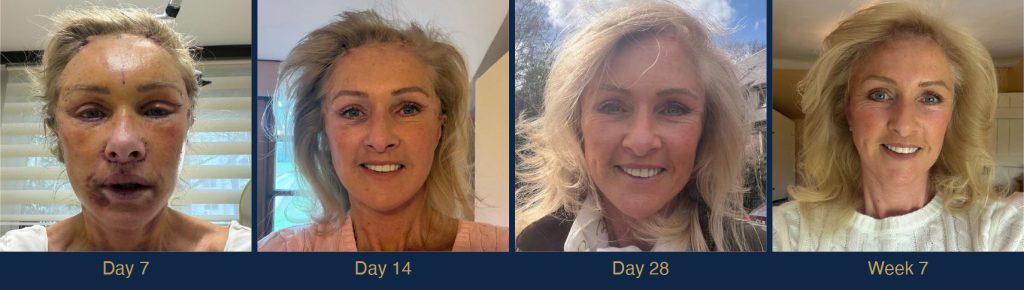
The photos below show one real patient at day 7, day 14, day 28 and week 7. Swelling and bruising are usually most visible in the first days and then fade steadily. Healing is different for everyone, so your own timeline may be faster or slower.
Sleeping with your head raised
Sleeping is the part people worry about most. Lie on your back with your head and shoulders raised on two or three pillows, or on a travel wedge pillow if you prefer one. A 5-star hotel can usually bring extra pillows, so ask at reception on your first evening. A soft pillow under each side of your head keeps you from rolling over in your sleep. Sleep with your head raised for the first two weeks.
Your daily nurse visit
An English-speaking nurse visits you every day at your hotel. The nurse checks your dressings and your healing, keeps track of your vital signs, helps with your medication and explains your aftercare instructions, so you are never guessing whether something is normal. Your nurse and patient coordinator also tell you how to reach the team between visits. If you notice swelling that grows quickly on one side, a fever, spreading redness or severe pain, contact them immediately and follow their instructions.
Do and avoid in the first two weeks
The first two weeks decide how smoothly you heal. This table sums up the basics, and your surgeon and nurse adjust it for your case.
| Do | Avoid |
|---|---|
| Sleep with your head raised for the first two weeks | Bending over and lifting heavy things |
| Take your medication as instructed and drink plenty of water | Strenuous activity and sports until your surgeon allows them |
| Follow your nurse’s instructions for dressings and any cold compresses | Smoking and nicotine, which slow healing |
| Take short, gentle walks once your surgeon or nurse allows them | Direct sun on healing skin, and flying before your surgeon confirms you are ready |
What is normal, and what to tell your nurse
Knowing the difference between normal healing and a warning sign makes the first week much calmer. Use this table to sort what you see and feel:
| Common and usually settles with time | Tell your nurse or patient coordinator straight away |
|---|---|
| Swelling and bruising on the face and neck, sometimes spreading toward the chest | Swelling that grows quickly or is much bigger on one side |
| Tightness, and numb or tingling skin around the cheeks and ears | Fever or chills |
| Mild unevenness between the two sides while the swelling goes down | Redness that spreads, or a wound that opens or leaks |
| Tiredness and a low mood in the first days | Severe pain that medication does not ease |
| Itching or a pulling feeling as the skin heals | Bleeding that does not stop, or trouble breathing |
You do not need to wait for the next visit, and you will never be a bother by asking. Your nurse knows your case and can tell you quickly whether something needs attention. Your surgeon then decides what to do.
Stepping out: gentle walks and getting around discreetly
Short, gentle walks help your circulation, but only when your surgeon allows them. Start in your room and the hotel corridors, then try a short walk near the hotel once your nurse says you can. Choose quiet times and quiet places, such as a hotel garden or a calm street close to your hotel. Your driver can take you anywhere you need to go, so you never have to use public transport.

It is natural to feel self-conscious. You will look swollen for a while, and that is part of recovery, not a sign that something is wrong. A few simple things make going out easier. Wear loose clothes that open at the front, so nothing is pulled over your head. Wear large sunglasses and a soft hat or scarf. Protect your healing skin and scars from direct sun, because Istanbul can be bright even outside the summer. If your surgeon gives you a compression garment, wear it as instructed, including on the way to the airport.
Save big sightseeing for another trip. Most patients find that quiet rest, good food at the hotel and short outings are enough. Your daily nurse visits show you how well you are healing.
Getting cleared to fly home
Your surgeon makes the call. You fly home when he has checked your healing and confirmed you are ready. This usually happens near the end of your stay, at your final check. He looks at your incisions and your swelling and decides whether travel is safe for you. If you are healing more slowly than expected, he may ask you to stay a little longer. This is why we ask you not to buy a flight that cannot be changed before your dates are confirmed.
At the final check, your surgeon looks at your incisions, the swelling and bruising, and how you feel, and asks about pain and medication. He also tells you what to do on the flight and in the first days at home, so you leave with clear instructions in your hands.
Some airlines have their own rules for passengers after surgery. Check with your airline before you travel and ask whether it needs any document. If it does, tell your patient coordinator in good time so the request can be sent to your surgeon. Do not wait until the day of your flight.
The journey home: flight comfort and remote care
On the flight, the main goals are to stay hydrated, keep moving and protect your face. Use this short list:
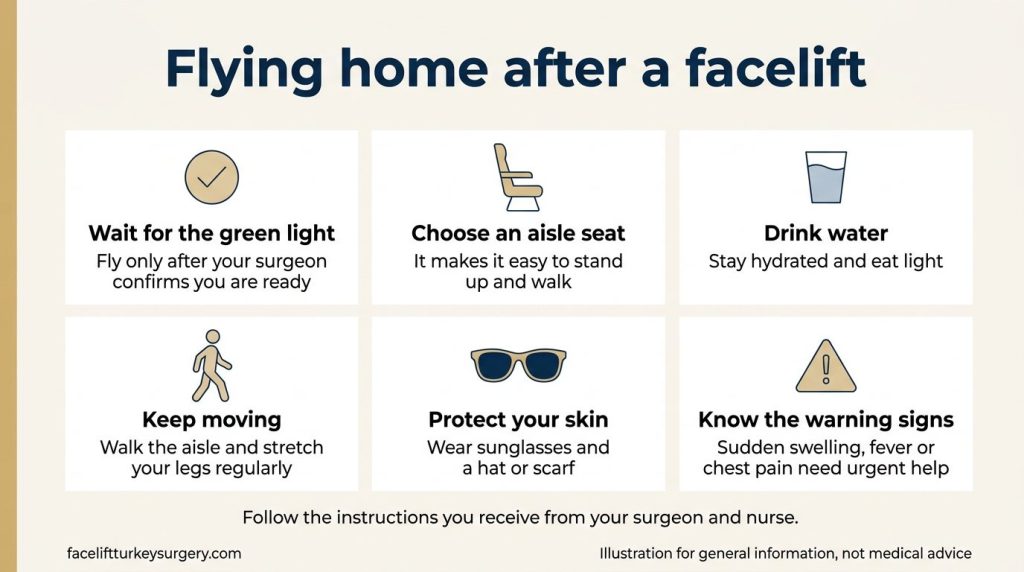
- Choose an aisle seat, so you can stand up and walk without disturbing others.
- Drink water regularly and eat light. Salty food can add to swelling.
- Walk the aisle and stretch your legs often. This lowers the chance of blood clots.
- Keep your head slightly raised if you can, and cover your face from sun with sunglasses and a hat or scarf.
- Ask the airline for assistance at the airport if you feel tired or unsteady.
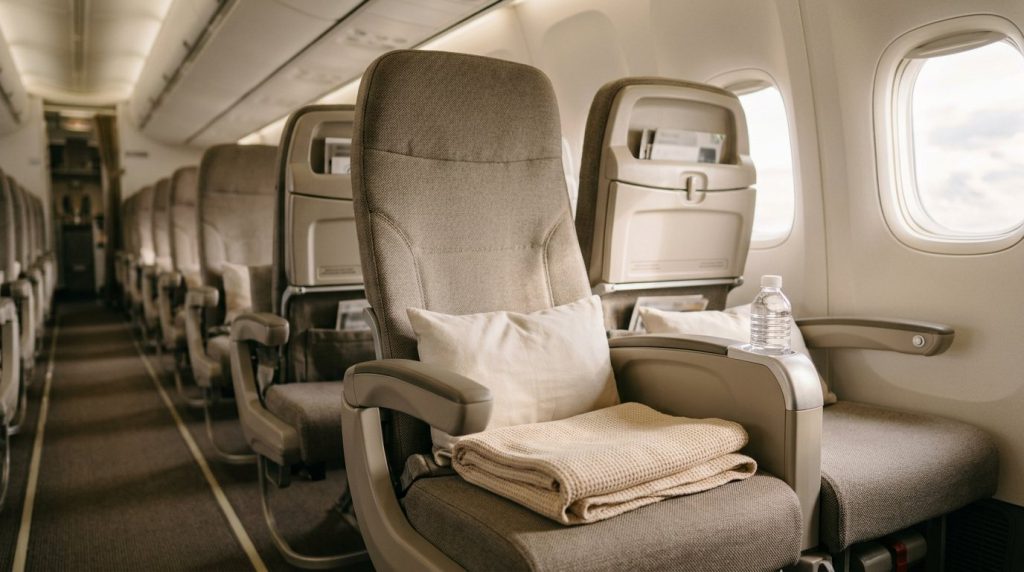
A little extra puffiness after a long flight is common. But sudden swelling on one side of your face, a fever, difficulty breathing, chest pain or a painful swollen leg need urgent medical help. Tell the cabin crew, and when you land, go to the nearest emergency department and contact your surgeon’s team.
Support after you land
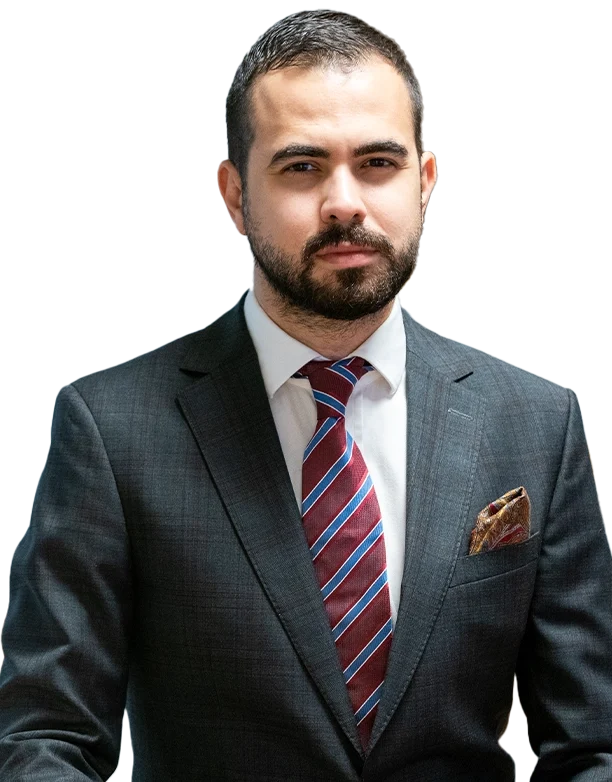
Your care does not end at the airport. For 12 months after surgery, you send progress photos regularly and your surgeon follows your healing. Your assigned nurse reminds you of each check-in. If you have a concern between check-ins, we arrange a video consultation with Op. Dr. Fevzi Kunter Erten. Read more about his training and credentials on his surgeon profile, and about the safeguards in our package on the Safety and Quality page.
Your recovery with Facelift Turkey Surgery
This is how the days after surgery are organized for our patients. A private driver takes you from the hospital to your 5-star hotel. Every day, an English-speaking nurse comes to your room, checks your healing and answers your questions. Op. Dr. Fevzi Kunter Erten sees you again at your final check before you travel. After you are home, the follow-up continues for 12 months: you send progress photos, your nurse reminds you when the next check-in is due, and your surgeon follows how you heal. You can see more about the surgeon on his profile page and about our hospitals on the hospitals page.
How our patients look after healing
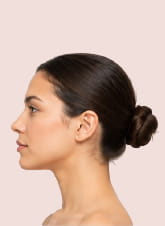
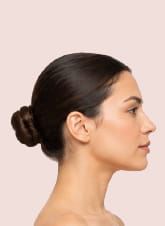
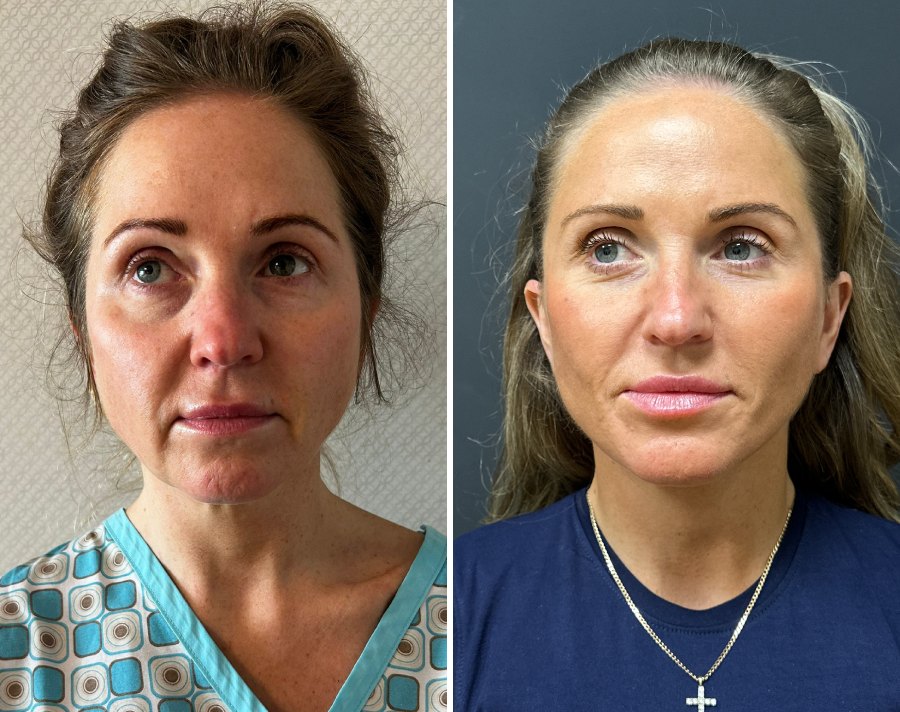
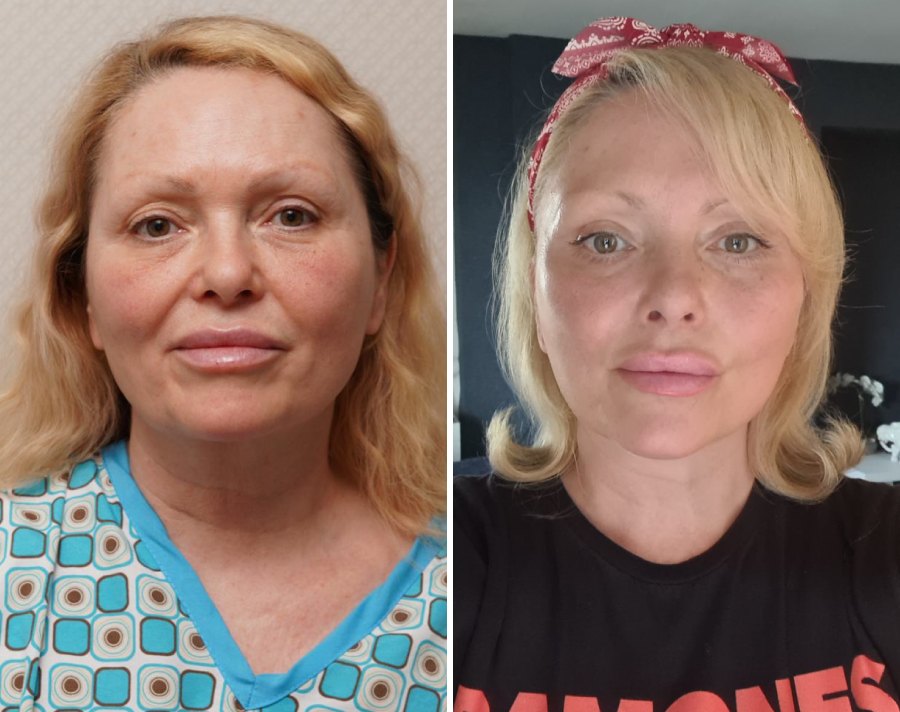
The photos in this guide show how a face changes during the first weeks. These two patients show what many of them look like once swelling has settled. They both gave written permission for their photos. Every face heals differently, and patients take their own after photos at home, so lighting and makeup are not always the same.
If you would like to see photos of patients with a plan similar to yours, ask for them in your consultation.
If you would like a recovery plan for your own dates and procedures, book a free consultation and talk to the surgeon before you decide.