
SMAS (Superficial Musculoaponeurotic System)
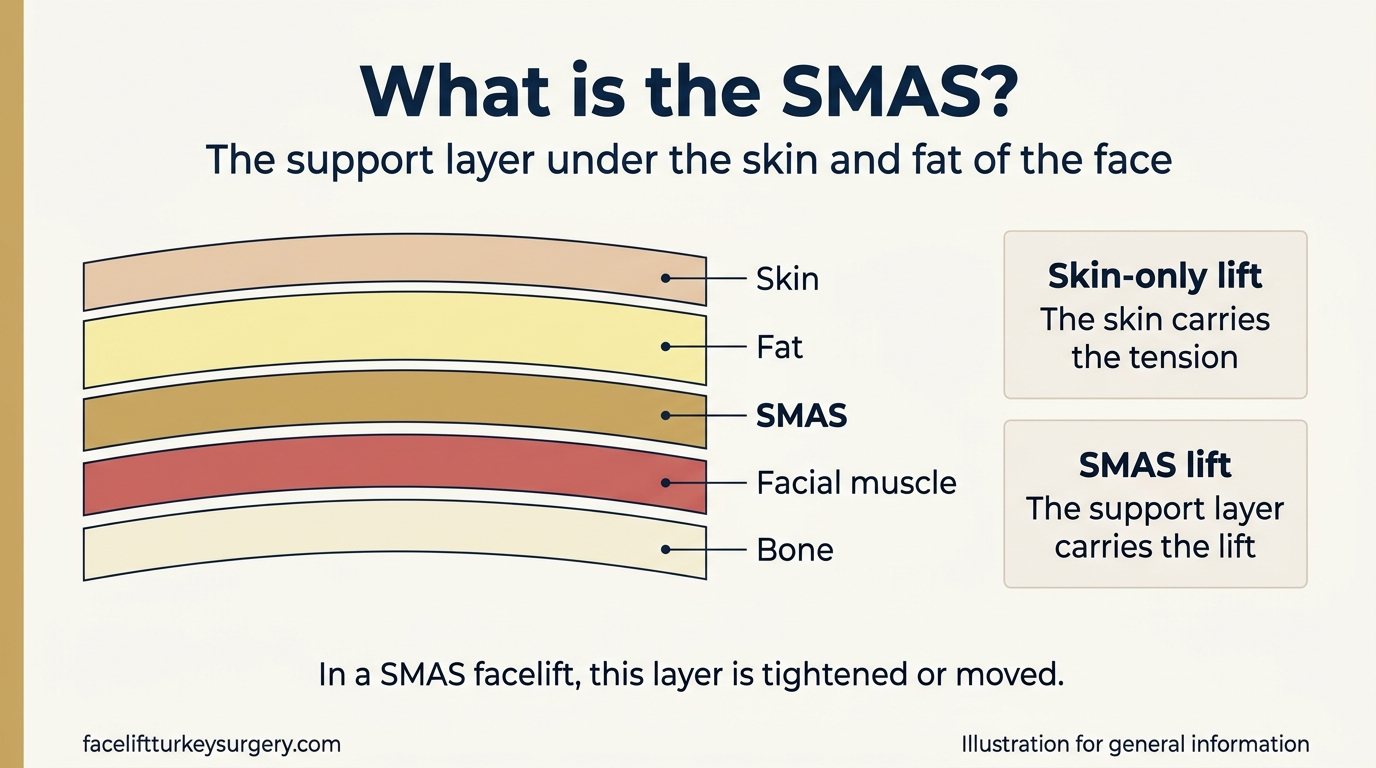
The superficial musculoaponeurotic system, called the SMAS, is a thin sheet of muscle and strong connective tissue that lies under the skin and the fat of the cheeks and neck. It connects the muscles of the face to the skin, continues into the platysma in the neck and reaches up toward the temple. In a young face, the SMAS helps hold the fat and the skin in place. With age it loosens, and the tissue above it slides down and forward. This is one reason jowls and folds beside the mouth form.
In a SMAS facelift, the surgeon tightens or repositions this layer and fixes it in a higher position with stitches. Common methods are folding it (plication), overlapping it (imbrication) or cutting and lifting it as a flap. Because the SMAS carries the lift, the skin only needs to be laid back with little tension. This is how a facelift can avoid the pulled, windblown look of older skin-only methods. The SMAS is also the layer that a deep plane facelift works beneath.
Questions to ask your surgeon about SMAS
A SMAS facelift suits mild to moderate sagging in the lower face. Your surgeon chooses the method from your anatomy, so ask which one is planned and why.